 Sweet Tooth Doctor
Difference between Veneers and Crowns
Dental Veneers vs. Dental Crowns: What Is the Difference?
Dental veneers and dental crowns are two common treatments that can improve the appearance of your smile. They can both help with teeth that are chipped, discolored, uneven, or worn down, but they are not the same treatment.
The best option depends on the condition of your tooth, how much tooth structure is healthy, your bite, and what you are hoping to improve.
A simple way to think about it is this: veneers mainly improve the front appearance of the tooth, while crowns cover and protect the entire tooth.
Let’s go over the difference between veneers and crowns so you can better understand which option may be right for you.
What Are Dental Veneers?
Dental veneers are thin, custom-made shells that are placed on the front surface of the teeth. They are usually made from porcelain or composite resin and are designed to improve the color, shape, size, or overall appearance of your smile.
Veneers are most commonly used on front teeth because they are mainly a cosmetic treatment.
Dental veneers may be a good option for:
Discolored teeth
If a tooth is deeply stained or discolored and whitening does not give the result you want, a veneer may help cover the discoloration and create a brighter appearance.
Chipped or slightly broken teeth
If a front tooth has a small chip or minor damage, a veneer can help restore the shape and make the tooth look more natural again.
Uneven or slightly misaligned teeth
If your teeth look uneven in shape or size, veneers can help create a more balanced and uniform smile.
Small gaps between teeth
For some patients, veneers can help close small spaces between teeth and create a more even smile.
What Is the Veneer Process Like?
Getting veneers usually takes more than one visit.
During the first visit, your dentist will examine your teeth, discuss your goals, and make sure veneers are a good option for your situation. In many cases, a small amount of enamel may need to be removed from the front surface of the tooth so the veneer can fit naturally and not look bulky.
Then, impressions or digital scans are taken so the dental lab can create custom veneers designed for your teeth. Once the veneers are ready, your dentist will check the fit, shape, and color before bonding them to the teeth.
The goal is to create a smile that looks beautiful but still natural.
What Are Dental Crowns?
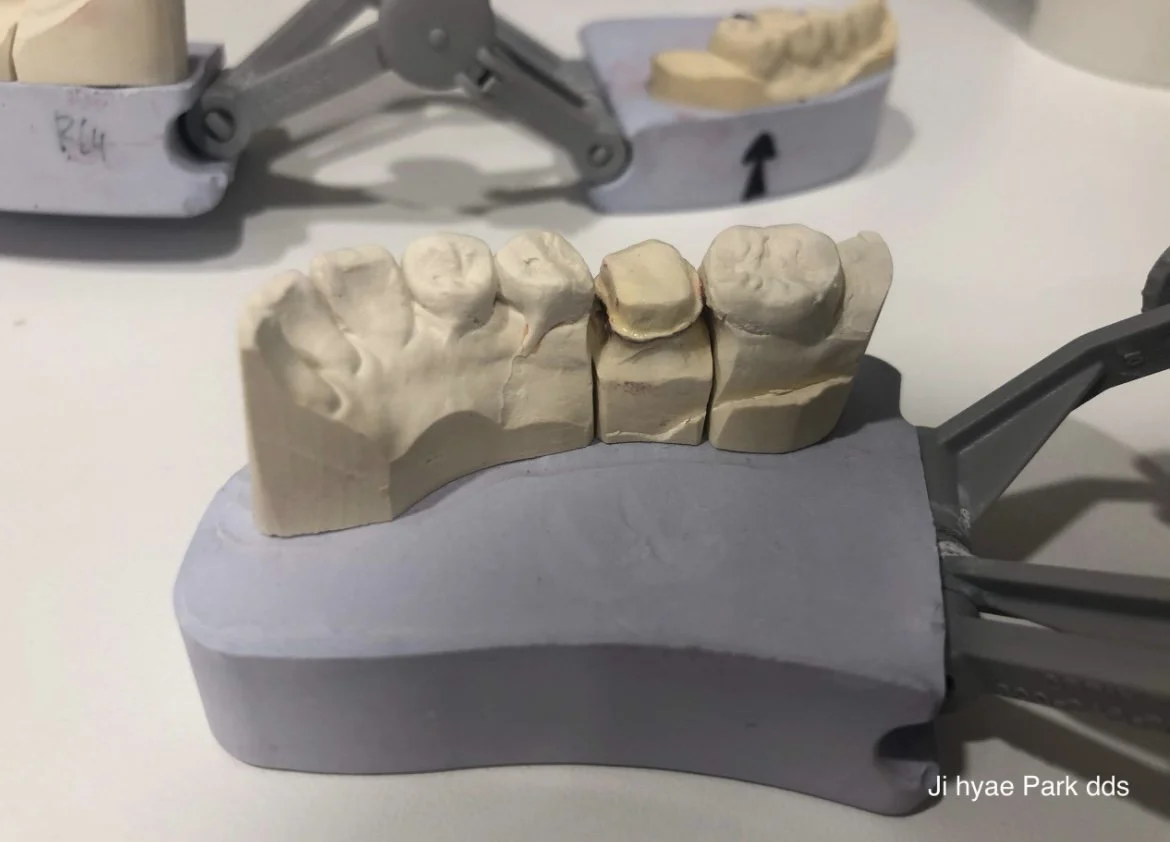
Dental crowns are tooth-shaped covers that fit over the entire visible part of the tooth. Unlike veneers, which only cover the front surface, crowns cover the whole tooth.
Crowns are often used when a tooth needs more strength, support, or protection. They can also improve the appearance of a tooth, but they are commonly recommended when the tooth has been weakened or damaged.
Dental crowns may be needed for:
Broken or cracked teeth
If a tooth is cracked, broken, or weakened, a crown can help protect it from further damage.
Severely decayed teeth
If a cavity is too large for a regular filling, a crown may be used to restore the tooth and help it function again.
Large fillings
When a tooth has a very large filling, there may not be enough healthy tooth structure left to support another filling. A crown can help strengthen and protect the tooth.
Teeth after root canal treatment
Many back teeth that have had root canal treatment need crowns because they can become more fragile over time.
Cosmetic concerns
Crowns can also improve the appearance of teeth that are severely discolored, misshapen, worn down, or uneven.
What Is the Crown Process Like?
Getting a crown usually takes two visits.
During the first visit, your dentist will remove decay or damaged tooth structure and shape the tooth so the crown can fit properly. An impression or digital scan is then taken and sent to the dental lab to create a custom crown.
In many cases, a temporary crown is placed while the permanent crown is being made.
At the second visit, the dentist will remove the temporary crown, check the fit and bite of the final crown, and cement it onto the tooth.
A crown should feel comfortable when you bite and should blend in naturally with your smile.
Main Differences Between Veneers and Crowns
Although veneers and crowns can both improve the way teeth look, they are used for different reasons.
Amount of Tooth Preparation
Veneers usually require less tooth preparation than crowns. Since veneers only cover the front of the tooth, only a thin layer of enamel may need to be removed.
Crowns require more tooth preparation because they cover the entire tooth. The tooth has to be shaped all around so the crown can fit over it properly.
Coverage
Veneers cover only the front surface of the tooth.
Crowns cover the entire tooth.
This is why crowns are better for teeth that need more strength and protection, while veneers are often better for teeth that are mostly healthy but need cosmetic improvement.
Function
Veneers are mainly used for cosmetic changes, such as improving color, shape, or small gaps.
Crowns are used for both function and appearance. They help protect teeth that are cracked, decayed, weakened, or heavily restored.
Durability
Both veneers and crowns can last for many years with good care. However, crowns are generally stronger because they cover the entire tooth and are designed to handle more biting and chewing pressure.
That being said, veneers can also be very durable when placed on the right teeth and cared for properly.
Which Option Is Right for You?
The right choice depends on your tooth and your goals.
If your tooth is mostly healthy and you mainly want to improve the appearance of your smile, a veneer may be a good option.
If your tooth is cracked, weakened, heavily filled, severely decayed, or needs more protection, a crown may be the better choice.
Sometimes patients come in wanting veneers, but after we examine the teeth, we may recommend crowns instead because the teeth need more support. Other times, a patient may think they need crowns, but veneers or whitening may be enough.
That is why a consultation is so important.
Caring for Veneers and Crowns
Whether you choose veneers or crowns, good home care is important.
Brush twice a day, floss daily, and keep up with regular dental cleanings. Try not to chew on ice, pens, or hard objects. If you clench or grind your teeth, your dentist may recommend a night guard to help protect your dental work.
With proper care, both veneers and crowns can help you smile with more confidence.
Thinking About Improving Your Smile?
If you are not sure whether veneers or crowns are right for you, that is completely okay. You do not have to figure it out on your own.
A dental exam can help us look at your teeth, listen to your concerns, and explain your options clearly. From there, we can recommend a treatment plan that fits your smile, your bite, and your long-term dental health.
If you have been thinking about improving your smile or restoring a damaged tooth, schedule a visit with your dentist. We would be happy to help you find the option that feels right for you. :)